13 January 2008
interesting saying
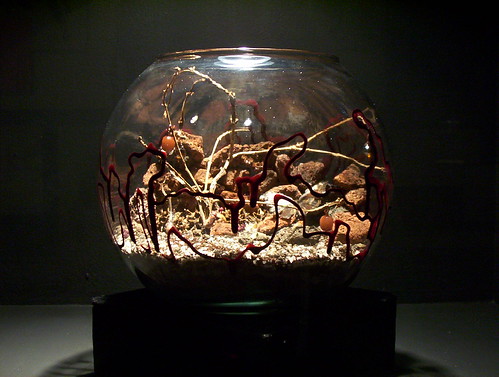
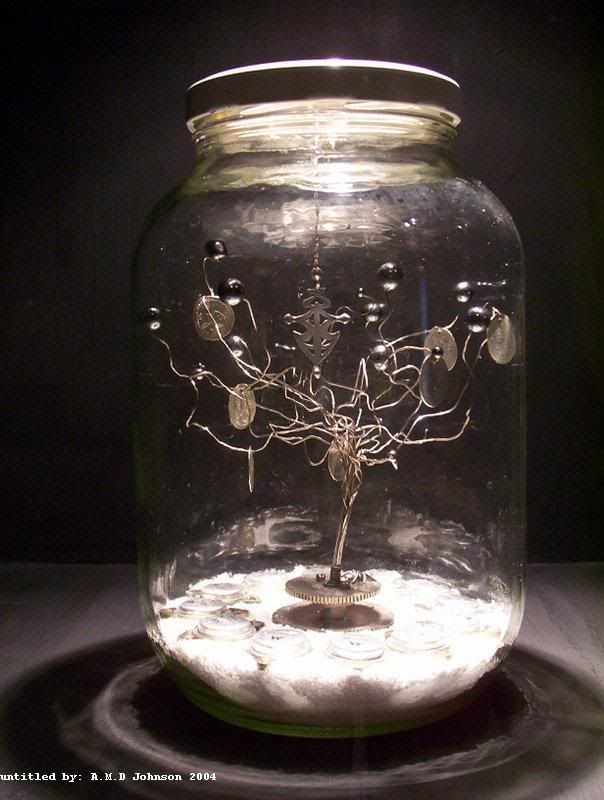
SOME PEOPLE SAY the right to make a Flute is hereditary, The right to play it is hereditary too. Flutes should be played to greet important strangers and to attract the attention of a young woman. Flutes have magic and speak a language known only to the birds, the wind, and Ohfvnkv. Flute music is Silence made solid.


23 November 2007
Blue Hole Spring or Big Spring
Blue Hole Spring is a greenish and murky pool location in Jackson County Florida. The small pool that is separated from the main pool by a land bridge is alternatively, crystal clear and blue. In the days before, slaves would use the caves near Blue Hole for worship. They also used the original spring as a natural refrigerator keeping meats preserved.
Later the Baptist churches in the area held there baptisms there at Blue Hole Spring.
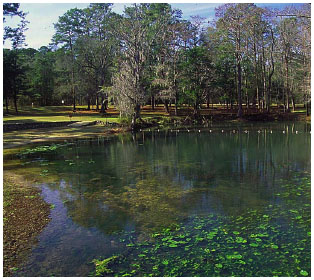
orignal photograph credit :R. Means,
from the Florida Geological Survey
Later the Baptist churches in the area held there baptisms there at Blue Hole Spring.
orignal photograph credit :R. Means,
from the Florida Geological Survey
19 November 2007
who came here first? RIGHT.
Myth-understanding and Early America
There is little doubt that the first contact between Africans and Native Americans did not occur within the contexts of European colonial expansion in the early sixteenth century. Though most texts detailing red/black relations on the Southern frontier begin with Africans among the explorations of Spaniards De Allyon, De Leon, Cordoba, De Soto, and Narvaez, evidently contact was much older. It is an underappreciation of this often untold history of the deep relationship between Africans and Indians that lies at the root of modern misunderstanding of much of American history.
Long before Christopher Columbus, Africans had been using favorable sea currents and small boats to come to the Americas. One of the reasons that Columbus was sent on his return voyage was "a report of the Indians of this Espanola who said that there had come to Espanola from the south and south-east, a black people who have the tops of their spears made of a metal which they call `guanin' (gold)." [6] The North Equatorial Current runs from West Africa to the Caribbean Islands and Southeastern United States; Thor Heyerdahl, in his Kon Tiki and Ra expeditions, proved that even the smallest boats could make this passage. [7]
There is also ample evidence of pre-Columbian contact with Africans in a variety of settings in Mesoamerica. The African characteristics of Olmec sculptures, similarities between African pyramids and reed boats and their counterparts in Mesoamerica, and pictographic/linguistic similarities between Northern African and Muscogean cultures are all evidence of ancient contact. [8] Upon observing the Olmec sculptures in 1869, Dr. Jose Melgar y Serrana reported "As a work of art, it is without exaggeration a magnificent sculpture, but what astonished me was the Ethiopic type represented. I reflect that there had undoubtedly been Negroes in this country." [9]
Dr. Leo Wiener proposed that African traders from Guinea founded a colony near Mexico City from which they exerted a cultural and commercial influence extending north to Canada and south to Peru. He also suggests that Native American ancient cultures, including the Maya, Aztec, and Inca civilizations, were directly or indirectly of African origins. [10] Historians and scientists from Augustus Le Plongeon in the nineteenth century to Barry Fell in the latter half of the twentieth century have asserted African contact with ancient America. [11] Whatever the truth is, it is certain that it was along the coastal rim of the Caribbean and the Gulf of Mexico where the early explorers encountered most African-Indians and tri-racial mixtures. [12]
Taking the African presence in ancient America seriously causes us to reframe our understanding of the relationship between African Americans and Native Americans in the Southeastern United States. What are the implications of this research for understanding Native American attitudes regarding race; moreover, what are the possibilities of African influence in the development of the temple mound culture in the Southeastern United States? Does this historic background explain the ease in which in which Africans learned to speak and translate indigenous languages and the ready assimilation of runaway slaves into Native American communities? It is not the purpose of this paper to fully explore the meaning of this critically underexplored phenomena, but to simply offer up the possibility of a thicker description of southeastern culture. [13]
Modern historians believe that the first Africans to be encountered by Native Americans were those who accompanied the early Spanish explorations of the Southeastern United States. Estavanico, "an Arabian black, native of Acamor," who accompanied Narvaez into Florida distinguished himself by his linguistic ability and "was in constant conversation" with the Indians. [14] In 1540, Hernando de Soto encountered the Cherokee and kidnapped the Lady of Cofitachequi, a prominent Cherokee leader. Escaping from De Soto, she returned home with an African slave belonging to one of De Soto's officers and "they lived together as man and wife." [15] Black slaves also played a critical role in Luis Vazquez de Ayllon's aborted colony in South Carolina; a slave revolt occurred in the colony and many of the African slaves fled to live among the Cherokee. [16]
It is important to understand the purpose of these early Spanish explorations in the Southeast. Ponce de Leon's 1512 patent from the Spanish authorities provided that any Indians that he might discover in the Americas should be divided among the members of his expedition that they should "derive whatever advantage might be secured thereby." [17] De Ayllon's 1523 cedula authorized him to "purchase prisoners of war held as slaves held by the natives, to employ them on his farms and export them as he saw fit, without the payment of any duty whatsoever upon them." [18]
When De Soto landed in Florida with his soldiers in 1539, he brought with him blood-hounds, chains, and iron collars for the acquisition and exportation of Indian slaves. Hundreds of men women and children were captured by de Soto and transported to the coasts for shipment to the Caribbean and to Spain. [19] A Cherokee from Oklahoma remembered his father's tale of the Spanish slave trade, "At an early state the Spanish engaged in the slave trade on this continent and in so doing kidnapped hundreds of thousands of the Indians from the Atlantic and Gulf Coasts to work their mines in the West Indies." [20]
Slavery as a phenomenon was not unknown to the Cherokee Nation or to Native Americans. However, it is distinctively different in both its content and its context as that which was practiced by the European. Rudi Halliburton in Red Over Black, his extensive work on slavery in the Cherokee Nation, concludes that "slavery, as an institution, did not exist among the Cherokees before the arrival or Europeans." [21] Booker T. Washington concurs, "The Indians who first met the white man on his continent do not seem to have held slaves until they first learned to do so from him." [22]
The Cherokee atsi nahtsa'i, or "one who is owned," were individuals captured or obtained through warfare with neighboring peoples and often given to clans who lost members in warfare. [23] To the extent that these individuals existed outside of the clan structure, they were in essence "outsiders" who lived on the periphery of Cherokee society. It was up to the clan-mothers, or "beloved women" of the Nation to decide upon the fate of these individuals. [24] If they accepted these "outsiders" as replacements for those individuals who had lost their lives in battle, these individuals became members of the clan and thus the nation. [25] If the "outsiders" were not accepted into the clan, then they served as the "other" in promoting clan self-understanding and solidarity. [26]
There was not a race-based understanding of "difference" within Native American cultures as that which had come to exist within the European mind over the hundred years following the discovery of the New World. Race as an identifying component in interaction did not exist within the traditional nations of the early Americas; into the nineteenth century the Cherokee were noted for their cultural accommodation. [27] William McLoughlin stressed the importance of clan relationships or larger collective identities (e.g., Ani-Yunwiya, Ani-Tsalagi, Ani-Kituhwagi) within indigenous nations as the critical components in their interactions with outsiders; race was not considered a critical element in perception or hostility. [28] In her pivotal work Slavery and the Evolution of Cherokee Society 1540-1866, Theda Perdue states that the Cherokee regarded Africans they encountered "simply as other human beings," and, "since the concept of race did not exist among Indians and since the Cherokees nearly always encountered Africans in the company of Europeans, one supposes that the Cherokee equated the two and failed to distinguish sharply between the races." [29] Kenneth Wiggins Porter, an African American historian, concurs with this conclusion: [we have] "no evidence that the northern Indian made any distinction between Negro and white on the basis of skin color, at least, not in the early period and when uninfluenced by white settlers." [30]
However, racism and religious intolerance were critical components in the European dispossession and enslavement of Native Americans in the colonial period. Originating in the Aristotelian concept of natural rights, the concept of white supremacy as it developed in the sixteenth century ran along these lines:
Those, therefore, who are as much inferior to others as are the body to the soul and beasts to men, are by nature slaves. He is by nature born slave who...shares in reason to the extent of apprehending it without possessing it. [31]
05 November 2007
in the family
my sister sent this email two years ago. (she was supposed to be working at the time... not sendng email)
can you tell storytelling runs in the family?
I recall many things from my childhood and some things still resonate with me today. For instance, my Aunt Honey, as she was affectionately called, was a school teacher in Quincy, Florida. She always wore dark A-line dresses with stockings knotted at her thighs. As soon as she arrived home from work, she would unknot those stockings, and free her legs for the evening! She wouldn't take them all the way off, the nylon would just hang out around her ankles until her shoes and other clothing were removed.
can you tell storytelling runs in the family?
I recall many things from my childhood and some things still resonate with me today. For instance, my Aunt Honey, as she was affectionately called, was a school teacher in Quincy, Florida. She always wore dark A-line dresses with stockings knotted at her thighs. As soon as she arrived home from work, she would unknot those stockings, and free her legs for the evening! She wouldn't take them all the way off, the nylon would just hang out around her ankles until her shoes and other clothing were removed.
I would always know when Honey was approaching. That loud, comforting swish, swish sound preceded her, and on Sundays, the swish was even louder and coming from all directions as all of the women in the house and at church were accompanied by that familiar sound. Although I didn't know it at the time, it was the sound of the nylons rubbing together at the thighs! Not knowing why, or what was making the sound, I knew that it only happened when Honey, or other ladies were all dressed up! For many years, and until recently (today), I associated being dressed up with that swish, swish sound. The louder it was, the more fabulous your outfit must have been, I thought.
Last week, that swish, swish sound was following me around! Not that I hadn't heard it before, but it seemed to be echoing through the halls at my office. After walking 50 or so feet from the break room back to my side of the suite, I made a bee-line for my co-worker's office and before I could ask the dreaded question, she told me that she could hear me coming from the other side of the suite! I told her that I was dressed up and was supposed to make that sound while walking! She then shared the secret to silencing those loud undergarments, and I didn't believe it until 10 minutes ago!
As I slipped into a new pair of stockings (excuse me, pantyhose), I remembered the advice from my co-worker. As I gently pulled each leg to its opposite side, I couldn't wait to see if her theory worked and to hear the sound of silence. Low and behold, as I walked through the corridor, no one heard me coming until I asked the question, "Did you hear me walking down the hall?" As I glanced in my startled co-worker's office, she could only laugh and tell me, I told you so! She was right! Just because I look good in my pulled together outfit, doesn't mean I have to sound like I look good!
So, Ladies, take off those pantyhose and turn them inside out! Unless, of course, you already know this trick -- I would advise to leave them on the "wrong side!"
Swish, swish . . .
Wilma (Cookie)
29 October 2007
membering ancestors
Thank you Anissia for the poem
Building An Altar For El Dia De Los Muertos:
Things I Remember You By
To my ancestors
I give you
a cross of red beans and rice
johnny-cakes as you liked
hot tea to chase it
and four books
I remember you by.
I give you
some wheat like that you’ve sown
some patches of cloth I sewed
black eyed peas (for the evil eye)
and some coffee beans
I remember you by.
I give you
some cedar I cut and dried and
a mason jar of traditional
tobacco
for your pipe.
That,
I remember you by.
I give you
Senegalese drum art for the heart beat,
Baby-girl’s first pair of stomp-dance shackles.
Hear her? -turtle cloth around,
and my patchwork skirt so when next I dance,
I'll remember you.
18 August 2007
green corn
here comes the fall , my second favorite season.
and coming back from vacation i feel like letting some things go.
the simple life.
since i've gotten back i've realized how much i am a third world-type woman. living a simple life would be great if i could maintain the life within the lmits of the bay area.
here's my wishlist:
a porch to sit on a eat, drink coffee, and chill
a place to garden
to keep my same commute (relatively)
a colored girls circle
monoi tiare tahiti and lots
to let go of that storage unit & stuff
to go to AL
visit g-grandads/& granmas grave
get the business stuff in order
get the final book edits to the editor.
make it to a labor day powwow
and coming back from vacation i feel like letting some things go.
the simple life.
since i've gotten back i've realized how much i am a third world-type woman. living a simple life would be great if i could maintain the life within the lmits of the bay area.
here's my wishlist:
a porch to sit on a eat, drink coffee, and chill
a place to garden
to keep my same commute (relatively)
a colored girls circle
monoi tiare tahiti and lots
to let go of that storage unit & stuff
to go to AL
visit g-grandads/& granmas grave
get the business stuff in order
get the final book edits to the editor.
make it to a labor day powwow
03 June 2007
fantasy lover
when i was a teenager i had the most awesome boyfriend. his name was Cody Six Kills (or was it Cody Six Killer. god he the boy was FINE) he lived in a small town(read THE STICKS ) where the most fun was had out shooting cans , drinking beers and running around wild waiting to start fights with whitefolks. i worked at the diner on the outskirts of town where he'd come by for a visit once and a while. usually he'd come into the diner about the time when i was really ready to kick the high school football players far out the door. the rednecks in that town were just a bore. i had already had my pay witheld because i kicked a guy in his throat. but hey, dude deserved it. i'm not your bitch. ya know. i remember sitting out on Cody's flatbed watching the stars and the strange cabbage patch across the street from the parking lot. cody was walking towards the truck with a smirk on his face. he put his beer down when he stepped up to me and slowly bent down to kiss me. i opened my mouth to his and fell into him. it felt like this almost everytime i kissed him. like liquid fire. his skin always, warm and brown. and whenever the mood hit him , he would sing a song. it was usually a powwow song or something like that. cause the boy could never remember the words to any other pop songs.
18 May 2007
a writer's impression
my next door neighbor kindly gave me his impression of Bottletree Diaries and it was great! thanks alot jeff! i will take his notes and continue the work. he called me a great writer and i was impressed.... wow.
little bit more structure & character development in a couple of the stories and hopefully i'll be set to go to an editor.
and then....
publish?
but first i gotta figure out how i'm gonna establish the pele and hi'iaka theme in the story without referencing the deites themselves. how can in one second someone be loving and caretaking yet, a minute later be a firey ball of vengence.
that's easy. pele. oshun. yemaya. all gods are like that.
aren't they.
jealousy can make you do anything.
little bit more structure & character development in a couple of the stories and hopefully i'll be set to go to an editor.
and then....
publish?
but first i gotta figure out how i'm gonna establish the pele and hi'iaka theme in the story without referencing the deites themselves. how can in one second someone be loving and caretaking yet, a minute later be a firey ball of vengence.
that's easy. pele. oshun. yemaya. all gods are like that.
aren't they.
jealousy can make you do anything.
16 May 2007
Hatfields & McCoys
the news story on the death of bodie miller's cousin ( and the cop he shot ) made me think of the hatfields and mccoys. i would love to write a story centered around feuding families in backwater towns....
Hatfield-McCoy Feud
Beckley Post-Herald
August 7, 1957
By Shirley Donnelly
courtesy of West Virginia Archives & History

Seventy-five years ago today was the beginning of some terrible times along the Tug River. At that time, what is now Mingo County was a part of Logan, home of the Hatfields. Across the Tug is Pike County, home of the McCoys.
Aug. 7, 1882, fell on a Monday and they were having an election in Kentucky. If you are up on the history of Kentucky you are well acquainted with the fact that an election in Kentucky is an occasion on which anything can happen - and usually does. They were voting that day on the usual state and county offices and on whether to increase the school tax. Such elections were days when the men of the mountains of Kentucky not only looked on the wine when it is red but maintained close communion with the mule when it is white.
Many are the tales one might tell about that election of three- quarters of a century ago but only one must suffice for today. On Blackberry Creek, a tributary of the Tug, the polls were open at sunrise. This particular polling place was on Hatfield Branch, a small run that empties into Blackberry just above Mateways, W.Va. Jerry Hatfield's home was there.
Across Turkey Foot Ridge on Blackberry Fork of Pond Creek stood the cabin of Randolph McCoy, who had a bunch of bad boys. Hatfields lived on both the West Virginia and Kentucky sides of the Tug and they had some bad boys, too.
Since the days of the Civil War - it had then only been a bit over 17 years since Appomattox - there had been bad blood and ill feeling between these two large families. William Anderson ("Devil Anse") Hatfield was the father of 13 children and Randolph (Rand'l) McCoy had done equally well in production. Those 13 children in each of these old mountain families spelled out bad luck in capital letters, - that is, bad for each of those two families.
The McCoy family hated the Hatfields because Johnson ("Johnse) Hatfield, handsome son of Devil Anse, had enjoyed a clandestine affair with Rose Anne McCoy, comely mountain lassie, the daughter of Randolph McCoy. Then too, the death of Harmon McCoy distilled still more hatred between the two big families. These two families had been on opposing sides in the Civil War, it should be stated. Also Floyd Hatfield, cousin of Devil Anse, and Randolph McCoy, had married sisters.
In 1873 these two brothers-in-law had a law suit over a sow and some pigs. Rand'l McCoy claimed the hogs but Floyd Hatfield said they were his'n. But the hogs went to Hatfield. Witnesses were accused of lying in Squire Anderson (Preacher Anse) Hatfield's court which was held in his house. Fuel was added to the flame of hatred between the two families, the McCoys and the Hatfields, as a result of the trial. From then on it was plain to see that the devil was to pay sooner or later. A man with one eye and only half- sense could see that, provided he was informed on local history along the Tug.
On that Monday 75 years ago today, Preacher Anderson Hat- field was one of the election officials and he was the best one of all the Hatfields, it was thought. He had a brother they called "Bad" Lias because he was a heavy drinker and was mean besides. Devil Anse had a brother named Elias but he wasn't as bad as "Bad 'Lias."
Both "Bad" 'Lias and Devil Anse's brother Elias were at the Kentucky election to watch political trends and otherwise pass the time of day. Preacher Anse Hatfield was only 47 years old at that time but most of the Hatfields minded him because he was a "Hardshell" Baptist minister. Among the Hatfields present that day, but not voting, was Ellison Hatfield, a Lieutenant in Pickett's Division and one who was in Pickett's immortal charge at Gettysburg on July 3,, 19 years before this election day.
Father of 11 children, Ellison Hatfield was a handsome and powerful man. He was wearing a big broad straw hat which they called a "Sundown" hat and everyone was kidding him about. Ellison turned taunts, aside by saying "I brought you some roughness for your cattle," alluding, of course, to his immense straw hat.
Drinking was rife that day and those with old grudges were carrying chips on their shoulders. Everyone was looking for trouble, it seemed. Beneath a big tree was a table and about it sat the election authorities. There the Australian ballot had not been heard of, apparently, and voter's choices were publicly stated to the poll clerks. This made more ill feeling.
Suddenly an open quarrel flared up-back under other threes at the rear of the polling spot. It seems that Tolbert McCoy, 31, son of Randolph McCoy, had bounced "Bad 'Lias" Hatfield to pay him the $1.75 which Tolbert claimed was due him on a fiddle he had recently sold "Bad 'Lias." This Bad 'Lias" lived a couple of miles up Blackberry Creek from where the trouble broke out.
Tolbert's two brothers, Phamer, 19, and Randolph McCoy Jr., 15, joined in the quarrel and backed up their brother Tolbert. At this juncture, up came Ellison Hatfield, drunk, and in a foul mood. Tolbert McCoy stalked Ellison Hatfield and reported to the Gettysburg hero that, "I'm hell on earth."
Ellison said, "You're a d-n (vulgar word) hog."
A fight ensued and Ellison Hatfield was stabbed and shot. Guns leaped from pockets and other shots were fired in anger. Those three McCoy boys were subsequently arrested and were being taken to Pikeville jail when Devil Anse and his friends took them away from the law officers. .
After being taken to the home of Anderson Ferrel in Warm Hollow, just back of the depot at Matewan, Ellison Hatfield expired the afternoon of Aug. 9,1882. Those 26 stab wounds and gashes, plus his gunshot wound, were too much for him.
That night the three McCoys were taken across the Tug at Matewan and shot to death in a paw paw thicket. From then on for years there was open warfare and fueding [sic] between the Hatfields and the McCoys01 May 2007
flying with my cousins
As we approached the clearing we looked at one another with a slow-burning grin. It took them by the hands, one on my right , the other on my left and we began to fly. When we reached just near the top of the treeline I let go of their hands. We were like kids playing in a field of tall grass, bopping up and down while screaming like banshee. We flew far and wide. We entered a white forest slowing down to a nice cruising speed. As we passed through K started to sing, I joined in and Ku followed. The song was an ancient rhythm, one neither of us really knew. But, blood memory kicked in and our gut took over. Mvscogee song? Cherokee song? Tuscarora song? I don't know. What we remember is that it is IN the melody.
09 April 2007
Hush harbors
From Wikipedia, the free encyclopedia
In antebellum America, a hush harbor was a place where slaves secretly gathered to practice Christianity or syncretic forms of worship, and to sing religious spirituals. Hush harbors were generally located in fields, swamps, or wooded areas so as to make the sounds of the slaves' worship inaudible to nearby slaveowners. As slave spirituality was feared and discouraged in antebellum America, hush harbors were forbidden and participants were often whipped or otherwise physically punished when discovered in the act of communal worship at hush harbors.
"In the slave quarters, however, African Americans organized their own "invisible institution." Through signals, passwords, and messages not discernible to whites, they called believers to "hush harbors" where they freely mixed African rhythms, singing, and beliefs with evangelical Christianity. We have little remaining written record of these religious gatherings. But it was here that the spirituals, with their double meanings of religious salvation and freedom from slavery, developed and flourished; and here, too, that black preachers, those who believed that God had called them to speak his Word, polished their "chanted sermons," or rhythmic, intoned style of extemporaneous preaching."
04 April 2007
Has the Western Band completely lost their minds?
Thanks uncle. somebody with some sense of the truth speaks. THANK GOD.
Glad to see southern cloth speaking out against this stupid ass shit.
A vocal minority of Cherokee Nation votes to reject tribal black Freedmen
Glad to see southern cloth speaking out against this stupid ass shit.
A vocal minority of Cherokee Nation votes to reject tribal black Freedmen
By ALBERT BENDER
Tennessee VoicesOklahoma Cherokee voters recently revoked the tribal citizenship of the Cherokee Freedmen — descendants of African slaves and free blacks, who have lived in the Cherokee Nation since before the Civil War and many since the 18th century.
But tribal policy is often determined by a few registered Cherokee voters who don't hold Cherokee values, and this vote is a clear example.Out of 45, 000 registered Cherokee voters, only 8,733 cast ballots (6,693 in favor of citizenship revocation and 2,040 against). Thousands of full-blood and high-blood quantum traditional Cherokees don't participate in Cherokee Nation politics. The overwhelming majority of registered Oklahoma Cherokees are of minimal blood quantum (some as little as 1/2,000) and are, by physical appearance, white, and they control the Cherokee government at will. This election stemmed partly from a Cherokee Supreme Court decision in March 2006, which declared that Cherokee Freedmen are tribal citizens, under the Treaty of 1866, and struck down a newly minted 1992 Cherokee law that held citizenship was restricted to Cherokees "by blood" (many of the Freedmen have documented Cherokee ancestry). The Cherokee Nation has no blood-quantum requirement, and blood degree varies from full-blood to 1/2,048.
Tribal membership is based on descendence from the Dawes Roll of 1906 and stands at 260,000. Tribal members, opposed to the court decision, collected more than 3,000 names and requested the issue be decided by voter referendum.
Blacks had been with the Cherokees and other Southern tribes in Tennessee and adjacent states since the 1700s.
The first enslaved Africans were brought into the Cherokee Nation by white traders who married Cherokee women and sired mixed-blood families. Later, these same wealthy families purchased more captive blacks to labor on their farms and plantations. Even so, there were never more than a small fraction of Cherokee families who ever owned slaves.
The full-blood Cherokees, then the majority of the Nation, did not own slaves and considered the "institution" as alien to Cherokee culture. But from the early 19th century, slavery grew, largely due to a very complex cultural process. By 1835, there was a strong movement to free all enslaved blacks and make them Cherokee citizens. This was derailed by the Trail of Tears.
Blacks shared all the horrors of the Trail of Tears, including a high death toll. During the Civil War, Oklahoma Cherokees were divided between the minority Confederate slaveholding mixed-bloods and the majority Unionist non-slaveholding full-bloods. The Unionist Cherokee government emancipated all slaves in 1863.
By all accounts, Cherokee slavery was very lenient compared to white plantation slavery ( blacks often ran away to the Cherokee and other Indian nations), but it was slavery, nonetheless. In Tahlequah, the western Cherokee capital, there was a slave market as in Southern white towns.
Historically, the Freedmen have endured all the agonies of native Cherokees and more during slavery, and it is only right that they should have continued Cherokee citizenship. Reportedly, the Freedmen are preparing legal challenges to their ouster ... ( see article link for full view )southern skies
i remember the sky.
the sky on the first of spring days in central alabama were spectacular.
blue as the deepest, clearest, sea blue. god, the sky was so striking and the sun was a fireball beating down on us. i remember the bird songs like it was yesterday.
on days like this in sunny california. i miss the southland.
the sky on the first of spring days in central alabama were spectacular.
blue as the deepest, clearest, sea blue. god, the sky was so striking and the sun was a fireball beating down on us. i remember the bird songs like it was yesterday.
on days like this in sunny california. i miss the southland.
26 March 2007
to all the dead.... huzzzah
to all my faire posse, st. lazarus' guild of the danse macabre
i miss thee,
dm. forever
bedlam boys
for to see mad tom of bedlam
ten thousand years i'll travel
mad maudlin goes on dirty toes
fr to save her shoes from gravel
still i sing bonny boys
bonny mad boys
bedlam boys are bonny
for they all gor bare and they
live by the air......
and they want no drink nor money
now i repent that ever
poor tom was so disdain'd
my wits were lost when him i cross't
which makes me go thus chain'd
still i sing bonny boys
bonny mad boys
bedlam boys are bonny
for they all gor bare and they
live by the air......
and they want no drink nor money
my staff has murder'd giants
my bag a long knife carries
for to cut mince pies from children's thighs
and feed them to the fairies
still i sing bonny boys
bonny mad boys
bedlam boys are bonny
for they all gor bare and they
live by the air......
and they want no drink nor money
for the other nine verses search: Bedlam Boys
i miss thee,
dm. forever
bedlam boys
for to see mad tom of bedlam
ten thousand years i'll travel
mad maudlin goes on dirty toes
fr to save her shoes from gravel
still i sing bonny boys
bonny mad boys
bedlam boys are bonny
for they all gor bare and they
live by the air......
and they want no drink nor money
now i repent that ever
poor tom was so disdain'd
my wits were lost when him i cross't
which makes me go thus chain'd
still i sing bonny boys
bonny mad boys
bedlam boys are bonny
for they all gor bare and they
live by the air......
and they want no drink nor money
my staff has murder'd giants
my bag a long knife carries
for to cut mince pies from children's thighs
and feed them to the fairies
still i sing bonny boys
bonny mad boys
bedlam boys are bonny
for they all gor bare and they
live by the air......
and they want no drink nor money
for the other nine verses search: Bedlam Boys
22 March 2007
dreaming in technicolor
i have a very weird problem.
i live on two different planes and when they collide it's bad. just they other day i woke up having this inclination to buy a gift for a friend. i didn't know what but i was thinking (dreamin) about where i was going to go shopping for it and i was all excited. it was a korean market that had a of these great housewares, teapots, stone pots , herbs, chopsticks, mortar & pestles, hardware, etc... and the vibe of the place i remember being awesome. so like i said i was REALLY excited to go out shopping. while i was in the shower i came to the startling realization as i was remembering driving directions from my house. this place was not real. well, not in this plane. i was maneuvering around places in my dreams. this place is a very real place in my dreams. but not here. i know how to get to it there.
that is a very weird confession i just made.
i'm a weirdo though so i guess it's normal
i live on two different planes and when they collide it's bad. just they other day i woke up having this inclination to buy a gift for a friend. i didn't know what but i was thinking (dreamin) about where i was going to go shopping for it and i was all excited. it was a korean market that had a of these great housewares, teapots, stone pots , herbs, chopsticks, mortar & pestles, hardware, etc... and the vibe of the place i remember being awesome. so like i said i was REALLY excited to go out shopping. while i was in the shower i came to the startling realization as i was remembering driving directions from my house. this place was not real. well, not in this plane. i was maneuvering around places in my dreams. this place is a very real place in my dreams. but not here. i know how to get to it there.
that is a very weird confession i just made.
i'm a weirdo though so i guess it's normal
18 March 2007
to turn a black cat
twist the bones and bend the back
yikety, yakety, magikal mystikal
trim him of his baby fat
yikety, yakety, magikal mystikal
give him fur black as black
yikety, yakety, magikal mystikal
just like that
yikety, yakety, magikal mystikal
trim him of his baby fat
yikety, yakety, magikal mystikal
give him fur black as black
yikety, yakety, magikal mystikal
just like that
14 March 2007
05 March 2007
nalo hopkinson
met nalo hopkinson tonite at a reading in berkeley. she 's a great lady. she's even a weirdo like myself. wow.
her new book THE NEW MOON'S ARM'S seems like something really awesome though it's not like her other works. i was happy to find that someone other than myself and friends analyzes black women's roles in sci-fi or fantasy to such a degree. it's strange yet not so suprising. i am really encouraged now to promote my work.
now if i can just get that mechanical license.....i 'd be all set.
wow. it's almost as exciting as meeting octavia e. bulter.
her new book THE NEW MOON'S ARM'S seems like something really awesome though it's not like her other works. i was happy to find that someone other than myself and friends analyzes black women's roles in sci-fi or fantasy to such a degree. it's strange yet not so suprising. i am really encouraged now to promote my work.
now if i can just get that mechanical license.....i 'd be all set.
wow. it's almost as exciting as meeting octavia e. bulter.
27 February 2007
snippet #2 from the anthology
Supposedly there was an old woman that lived in a house on the outskirts of town near a lovely pecan grove.
In her time, the time of her youth, she had been one of the most beautiful and sought-after girls around. So adorned, so smart, so pretty she was, yet so unhappy. Her parents had passed on before she was of marrying age, leaving her with the family homestead where she lived alone for many years.
One night at the very beginning of a thunderstorm, she sat near the fireplace. The lights had gone out the day before and she was almost down to the last couple of bottles of lamp oil. If worst came to worst, she knew she could always use some leftover bacon grease.
The windblown raindrops pelted against the kitchen window. She remembered her mother singing through the thunder to settle her nerves. Unlike her mother though, she loved thunderstorms and the lightning that followed. But since her parents had gone she had taken to singing in the rain. At the writing desk near the window, the young woman sat down and began to write. She wrote and wrote and wrote some more. She had no idea of what she was writing until she began to read it aloud.
….. And finally. I want a lover for me, someone who is kind, honest
and respectful. Who will love will all his heart and never leave me broken.
X X X
She signed her name, folded the paper and placed it in a flannel pouch.
It rained for nine days straight and on the last night of the storm a man appeared on her doorstep. She invited him in out of the downpour without question. He sat at her kitchen table, his boots dripping water clenching the cup of tea before him. When he spoke his voice was deep and melodic. She kept his cup warm and full.
He entranced her with his words. She enthralled him with her charm.
And so it began.
The townsfolk whispered as they passed them, at the church, at the jook joint, everywhere. No one knew why but they just knew something wasn’t quite right. Months passed as their love affair blossomed into a love that the young woman could not have imagined in her wildest dreams.
One cold spring night after dinner they sat next to the fire staring into the golden glow.
They exchanged kiss after kiss until the fire began to die down. The wind outside had just begun to howl and the young man offered to fetch more kindling before the weather worsened. She kissed him and retreated to bed.
He stepped off the porch and into the darkness of the pecan grove.
As the sun rose, the young woman found herself wrapped in blankets on an empty bed.
She gathered the covers in her hands and took in a deep breath inhaling the last remaining scent of her lover.
In her time, the time of her youth, she had been one of the most beautiful and sought-after girls around. So adorned, so smart, so pretty she was, yet so unhappy. Her parents had passed on before she was of marrying age, leaving her with the family homestead where she lived alone for many years.
One night at the very beginning of a thunderstorm, she sat near the fireplace. The lights had gone out the day before and she was almost down to the last couple of bottles of lamp oil. If worst came to worst, she knew she could always use some leftover bacon grease.
The windblown raindrops pelted against the kitchen window. She remembered her mother singing through the thunder to settle her nerves. Unlike her mother though, she loved thunderstorms and the lightning that followed. But since her parents had gone she had taken to singing in the rain. At the writing desk near the window, the young woman sat down and began to write. She wrote and wrote and wrote some more. She had no idea of what she was writing until she began to read it aloud.
and respectful. Who will love will all his heart and never leave me broken.
X X X
She signed her name, folded the paper and placed it in a flannel pouch.
It rained for nine days straight and on the last night of the storm a man appeared on her doorstep. She invited him in out of the downpour without question. He sat at her kitchen table, his boots dripping water clenching the cup of tea before him. When he spoke his voice was deep and melodic. She kept his cup warm and full.
He entranced her with his words. She enthralled him with her charm.
And so it began.
The townsfolk whispered as they passed them, at the church, at the jook joint, everywhere. No one knew why but they just knew something wasn’t quite right. Months passed as their love affair blossomed into a love that the young woman could not have imagined in her wildest dreams.
One cold spring night after dinner they sat next to the fire staring into the golden glow.
They exchanged kiss after kiss until the fire began to die down. The wind outside had just begun to howl and the young man offered to fetch more kindling before the weather worsened. She kissed him and retreated to bed.
He stepped off the porch and into the darkness of the pecan grove.
As the sun rose, the young woman found herself wrapped in blankets on an empty bed.
She gathered the covers in her hands and took in a deep breath inhaling the last remaining scent of her lover.
18 February 2007
a very cool website
the moonlit road is a GREAT website. if you like folktales and ghost stories, check it out!
you can read as well as have a story read to you! i think that's awesome. storytelling is all about the storytellers and the delivery of the content.
you can read as well as have a story read to you! i think that's awesome. storytelling is all about the storytellers and the delivery of the content.
Subscribe to:
Posts (Atom)

 Posts
Posts